 26
May,2026
26
May,2026
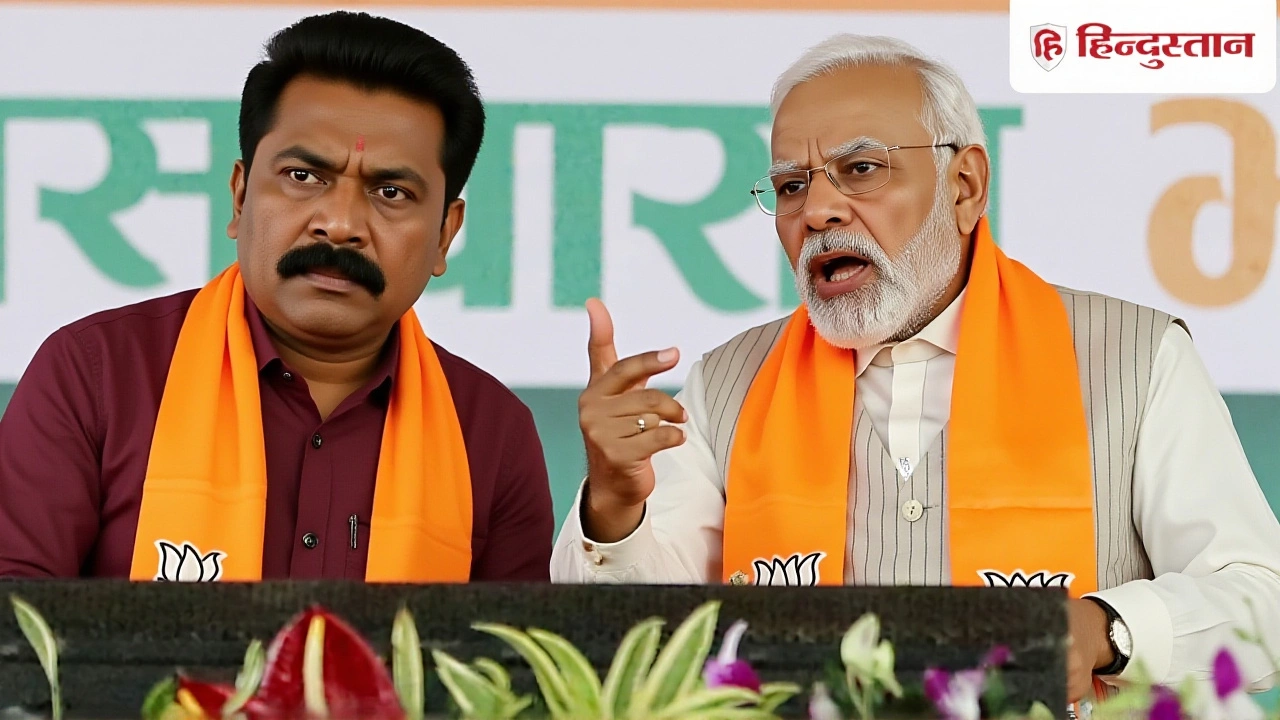
Political circles in New Delhi are buzzing with a controversial claim: that having fewer than 50,000 social media followers could disqualify you from getting an election ticket. The allegation centers on a supposed conversation between Narendra Modi, Prime Minister of India and senior party leader Shivraj Singh Chouhan, former Chief Minister of Madhya Pradesh. While the Bharatiya Janata Party has not officially confirmed this rigid threshold, the story highlights a massive shift in how Indian politicians are being evaluated.
Here’s the thing: there is no official press release or verified transcript confirming this exact exchange. Yet, the narrative has gained traction across political commentary platforms and social media feeds. It suggests that in the run-up to recent election cycles—whether state assemblies or the Lok Sabha—the party leadership prioritized digital reach over traditional grassroots metrics for some candidates.
The Digital Ticket Criteria
According to anecdotal reports circulating since late May 2026, Narendra Modi reportedly told Shivraj Singh Chouhan that aspirants with under 50,000 followers would struggle to secure nominations. This isn't just about vanity metrics; it reflects a broader strategy within the Bharatiya Janata Party to professionalize campaigning through data analytics.
The logic is straightforward but stark. In modern campaigns, visibility equals viability. A candidate with a robust online presence can bypass traditional media gatekeepers and communicate directly with voters. But wait—does follower count equal influence? Not necessarily. Critics argue that this metric favors younger, tech-savvy aspirants while sidelining experienced leaders who may lack digital savvy but possess deep local connections.
Consider the numbers. Fifty thousand followers is a significant barrier for first-time candidates, especially in rural constituencies where internet penetration varies. If enforced strictly, this rule would likely filter out hundreds of potential candidates across large states like Uttar Pradesh and Madhya Pradesh.
Context and Credibility Gaps
Turns out, verifying this claim is tricky. No open-source report provides a specific date, venue, or verbatim quote for this alleged discussion. Most references appear in opinion pieces or unsourced social media posts rather than mainstream news outlets with rigorous fact-checking standards.
However, the context fits. Since the 2014 general elections, the BJP has heavily invested in digital infrastructure, including the NaMo App and extensive WhatsApp networks. Union Home Minister Amit Shah and other top leaders have frequently emphasized the importance of social media engagement. So, while the specific "50,000 follower" rule remains unconfirmed, the underlying trend toward digital-first candidate selection is real.
Interestingly, Shivraj Singh Chouhan himself commands millions of followers on platforms like X (formerly Twitter) and Facebook. His personal brand is digitally strong, which might explain why he wouldn’t object to such a criterion—or perhaps why he was the recipient of this directive.
Impact on Political Aspirants
If this informal guideline holds weight, the ripple effects are substantial. Aspiring politicians now face pressure to build personal brands online before even securing a nomination. This shifts resources away from door-to-door campaigning and toward hiring social media managers, content creators, and digital marketing agencies.
But here’s the twist: authenticity matters. Follower counts can be inflated by bots or paid promotions. Does the party audit these numbers? There’s no public evidence of verification mechanisms. Without transparency, such a rule could inadvertently reward artificial popularity over genuine community support.
Moreover, this approach raises equity concerns. Candidates from marginalized backgrounds or less connected regions may find it harder to amass such following organically. It risks creating a two-tier system where only those with financial means or existing fame can compete effectively.
Broader Implications for Indian Democracy
This debate touches on deeper questions about representation in democracy. Should electoral success depend partly on one’s ability to navigate social media algorithms? For many citizens, especially older generations, offline interactions remain crucial. Overemphasizing digital metrics could alienate segments of the electorate who value face-to-face accountability.
Yet, ignoring digital trends is equally risky. Voters increasingly consume news and engage with politics online. Parties that fail to adapt risk losing relevance among younger demographics. The challenge lies in balancing digital outreach with traditional grassroots work—a delicate act that requires nuanced judgment.
What Comes Next?
As future election cycles approach, expect more scrutiny on how parties select candidates. Will other major parties adopt similar digital thresholds? Or will they counter with emphasis on caste arithmetic, local reputation, or organizational loyalty? Only time will tell.
For now, journalists and analysts await official clarification. Until then, the "50,000 follower" rule remains a compelling anecdote illustrating the evolving landscape of Indian politics—one where likes and shares might hold as much power as votes.
Frequently Asked Questions
Did Narendra Modi officially announce a 50,000-follower requirement for BJP tickets?
No, there is no official announcement or documented proof from the Bharatiya Janata Party or Prime Minister Narendra Modi confirming this specific rule. The claim originates from anecdotal reports and political commentary without verified sources, transcripts, or dates.
Who is Shivraj Singh Chouhan and why is he involved in this story?
Shivraj Singh Chouhan is a senior leader of the BJP and former Chief Minister of Madhya Pradesh. He is mentioned in these reports as the recipient of the alleged directive from Narendra Modi regarding social media follower thresholds for candidate selection.
Does the Election Commission of India regulate social media followers for candidates?
No, the Election Commission of India does not mandate any social media follower requirements for candidates. Such criteria, if applied, would be internal party guidelines decided by individual political organizations like the BJP, not statutory regulations.
How might a 50,000-follower rule affect grassroots politicians?
It could disadvantage experienced but digitally inactive leaders, particularly those from rural areas or older age groups. They may struggle to meet such high digital benchmarks compared to younger, tech-savvy aspirants who can easily grow their online presence.
Is this trend limited to the BJP or affecting other parties too?
While this specific rumor focuses on the BJP, most major Indian political parties are increasingly using data-driven approaches for candidate selection. Other parties may adopt similar digital metrics to remain competitive in modern campaigns.